Article
Mar 20, 2026
How to Turn Product Releases Into Pipeline: A B2B SaaS Launch Playbook
Most B2B SaaS launches are communication events that nobody acts on, and this playbook shows how to turn them into pipeline-generating GTM motions with a tiering system, asset checklist, and a 72-hour post-launch framework.
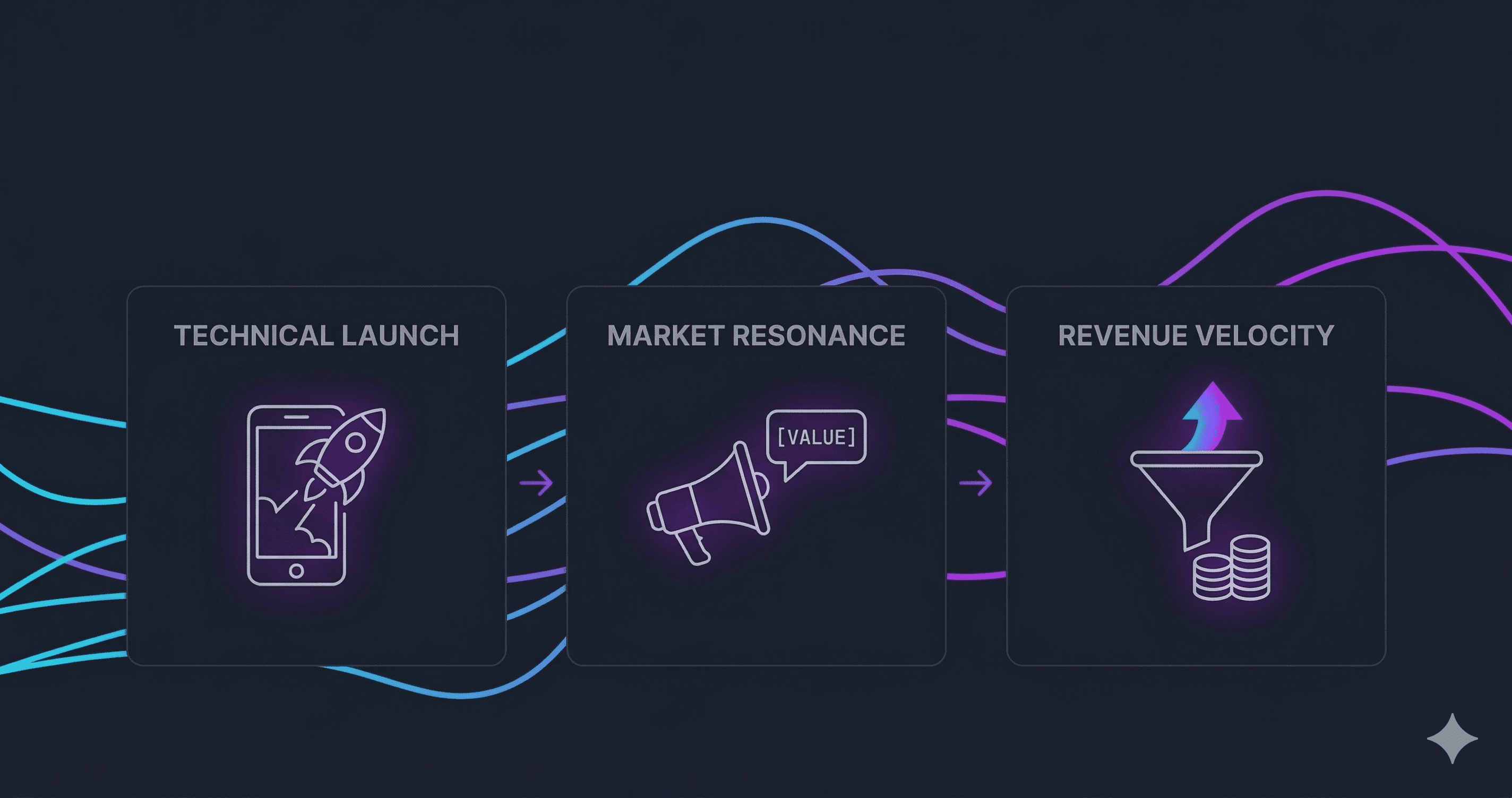
Last year I watched a SaaS company ship their most important product update in two years. New pricing tier. New buyer persona. New revenue model. The kind of release that should reshape how the market thinks about them.
The launch plan was a blog post, a tweet, and an email to existing customers.
That was it.
The blog got 340 views. The tweet got 12 likes (mostly from employees). The email had a 22% open rate and zero replied. Pipeline impact? Nothing measurable. Three months of product work, launched into total silence.
The CEO asked marketing what happened. Marketing said "we need more budget for paid." The Head of Product said "maybe the market isn't ready." The real answer was simpler. Nobody treated the launch like a GTM motion. They treated it like a communications event.
This is the default in B2B SaaS. A launch is something you announce, not something you execute. And the gap between those two things is where pipeline goes to die.
Here's how to close that gap.
The Root Problem: Every Release Gets the Same Treatment
Most SaaS companies have exactly one launch mode. Ship the feature, write the blog, send the email, post on social. Whether it's a company-defining platform release or a minor UX improvement, the playbook is identical. Everything gets a medium-effort launch, which means the big releases are under-supported and the small ones waste time they don't deserve.
The fix starts with acknowledging a simple truth: not every release earns the same level of effort. A new product tier that opens an entirely new market segment deserves a fundamentally different launch motion than a quality-of-life improvement to the settings page.
Step 1: Build a Launch Tiering System
Before you plan any individual launch, build the framework that determines how much effort goes into each one. This is the single highest-leverage thing a PMM can do for a product-led company.
Tier 1: Market-level launches These change how the market perceives your company. New product lines, new pricing models, major platform shifts, entry into a new segment. You'll run maybe two or three of these per year.
Effort: full GTM motion. Dedicated landing page, email sequences to prospects and customers, sales enablement package, social campaign (multi-post, multi-day), internal alignment brief, press or analyst outreach if relevant, and a post-launch retro.
Timeline: 4 to 6 weeks of prep.
Tier 2: Notable releases These matter to your existing buyers and active pipeline. New integrations, significant feature additions, workflow improvements that solve a known pain point. You'll have maybe one or two per month.
Effort: targeted launch. Blog post, email to the relevant segment, social posts (2 to 3), sales team brief, and product changelog update.
Timeline: 1 to 2 weeks of prep.
Tier 3: Incremental updates Bug fixes, minor UX improvements, small feature enhancements. Important for product quality but not worth a marketing motion.
Effort: changelog entry and an in-app notification if relevant. That's it.
Timeline: ships when ready. No marketing prep needed.
The magic of this system is what it prevents. It prevents your team from spending two weeks building a launch campaign for a feature that belongs in the changelog. And it prevents your biggest releases from getting the same half-hearted treatment as everything else.
How to decide which tier: Ask two questions. First, does this change who can buy our product or why they buy it? If yes, it's Tier 1. Second, does this solve a problem that active prospects or existing customers have specifically asked about? If yes, it's Tier 2. Everything else is Tier 3.
Step 2: Build the Tier 1 Launch Brief
Every Tier 1 launch starts with a one-page brief that gets alignment before a single asset gets created. This is the document that prevents the "we built all the assets and then realized we were targeting the wrong persona" disaster.
The brief answers six questions:
Who is this for? Not "all our customers." A specific persona with a specific problem. If you can't name the job title and the pain point in one sentence, the launch isn't focused enough.
What changes for them? The before-and-after for this buyer. Not what the feature does. What's different about their work, their metrics, or their day after they adopt this.
Why now? What makes this release timely? Is there a market shift, a competitive gap, a customer request pattern? This is what gives the launch narrative urgency beyond "we built it."
What does success look like? A specific metric and a target. Not "generate awareness." More like "drive 150 qualified signups for the new tier in the first 30 days" or "source 40 sales-qualified opportunities from the launch email sequence."
What's the competitive context? Does this close a gap? Create a lead? Change the comparison? Your sales team will get asked about this on calls. The brief should arm them with the answer.
What's the one thing we want the market to remember? If a prospect reads the blog, sees the social post, and gets the email, what's the single message that should stick? One sentence. Not three.
This brief takes maybe an hour to write. It saves weeks of wasted effort downstream because every asset, every email, every social post gets built against the same strategic foundation.
Step 3: Map the Asset Checklist to the Buyer Journey
Here's where most launch plans fall apart. They treat assets as a production checklist (blog, email, social, done) instead of mapping them to where the buyer actually is.
A prospect who's never heard of you needs a different message than someone already in a free trial. An existing customer on your lowest tier needs a different email than an enterprise prospect in active evaluation. Same launch, completely different conversations.
For new prospects (awareness): The goal is attention. Lead with the problem, not the product. A LinkedIn post that names the pain point so specifically that someone in your ICP stops scrolling. A blog post that frames the market problem first and positions your release as the answer second.
For active pipeline (consideration): The goal is advancement. A sales email from the AE that connects the new release to the specific problem discussed in the last call. An updated demo flow that incorporates the new capability. A one-pager the prospect can share with their buying committee.
For existing customers (adoption/expansion): The goal is activation. An in-app announcement that shows the feature in context. A "what's new" email that leads with the outcome, not the feature. A webinar or Loom walkthrough for customers who want depth.
For the internal team (enablement): The goal is confidence. A Slack brief or 15-minute Loom that covers: what launched, who it's for, what to say about it, and the three most likely questions they'll get. Your sales reps should be able to talk about this release within 10 minutes of reading the brief.
Most launches produce assets for the first category and ignore the other three. That's why a launch can generate blog traffic but zero pipeline. The blog brought in new eyeballs, but nobody armed the sales team to convert the warm prospects who were already in play.
Step 4: Sequence the Launch, Don't Dump It
The worst thing you can do with a Tier 1 launch is publish everything on the same day and hope for the best. A launch should build momentum, not peak and crash within 24 hours.
Here's a sequencing framework that works:
Day -7 to -3 (pre-launch): Internal enablement goes out. Sales team gets briefed. Customer success gets the talking points. If you have a beta group, they get early access and you collect quotes.
Day -1 (teaser): A LinkedIn post from the founder or CEO hinting at what's coming. Something specific enough to be interesting, vague enough to create curiosity. Not "big announcement tomorrow" (generic). More like "We've been working on something that solves the problem every ops team complains about but nobody's fixed properly." One post. No links. Let it breathe.
Day 0 (launch day): Blog goes live. Landing page goes live. Email to the full list. Social post with the key message and a clear CTA. Sales gets the signal to reach out to relevant open opportunities.
Day 1 to 3 (amplification): Founder posts a personal story about why this matters. A second social post with a different angle (maybe a customer quote or a specific data point). The sales team follows up with prospects who engaged with the email. Targeted emails to the specific segment this release serves most.
Day 7 (depth): A how-to blog or a demo video that goes deeper for people who are past the "what is this?" stage and into "how does this work?" The follow-up email to people who clicked but didn't convert.
Day 14+ (sustained): Repurpose the launch content into derivative assets. The blog becomes LinkedIn posts. Customer success uses the one-pager in QBRs. The sales team incorporates the new positioning into their standard pitch. The launch isn't over. It transitions into business as usual.
Step 5: Run the 72-Hour Retro
The first 72 hours after a launch tell you almost everything you need to know about whether the launch worked and what to fix for next time. But most teams never look back. They're already onto the next thing.
Block 30 minutes on day 4. Run through five questions:
What moved? Check the metric you defined in the brief. Did signups increase? Did the sales team source new opportunities? Did existing customers activate the feature? Don't measure vanity metrics. Measure the one thing you said mattered.
What resonated? Which email subject line got the highest open rate? Which social post got the most engagement? Which angle did the sales team report working best on calls? This tells you what the market actually cares about, which is often different from what you thought they'd care about.
What flopped? Which assets got ignored? Which channels underperformed? Where did the buyer journey break? No blame. Just data.
What did the sales team hear? This is the most underrated input. Get on a 10-minute call with two or three reps and ask: "What questions did prospects ask about the launch? What objections came up? What did they get excited about?" This qualitative data is gold for the next launch.
What changes for next time? Write down the top three adjustments. Not a 20-item improvement list. Three things. Make them specific. "Next Tier 1 launch: brief the sales team 5 days out instead of 2" is useful. "Do better marketing" is not.
Build a simple retro log. After three or four launches, patterns emerge. You'll see which channels consistently perform, which asset types get used, and where the process breaks. This is how good launches become great launches over time.
The Bottom Line
A product launch is not a blog post with a social media plan attached. It's a GTM motion with a specific revenue target, a clear buyer, and a sequenced execution plan that matches effort to impact.
The companies that turn launches into pipeline are the ones that tier their releases, write the brief before the assets, map content to the buyer journey, sequence for momentum instead of dumping everything day one, and run the retro that makes the next launch better.
Most of this is process, not creativity. Build the system once. Run it every time. The launches get better because the learning compounds.
Your product team builds features worth launching. The question is whether your launch motion is worth the product they built.
Sourav is the founder of Clayto.io, a fractional Product Marketing partner for B2B SaaS companies. We build the PMM workflows, systems, and assets that turn product momentum into pipeline. If your PMM function is running on Slack messages and good intentions, we should talk.